
When Bankruptcy Is Better Than Continuing Title Loan Payments
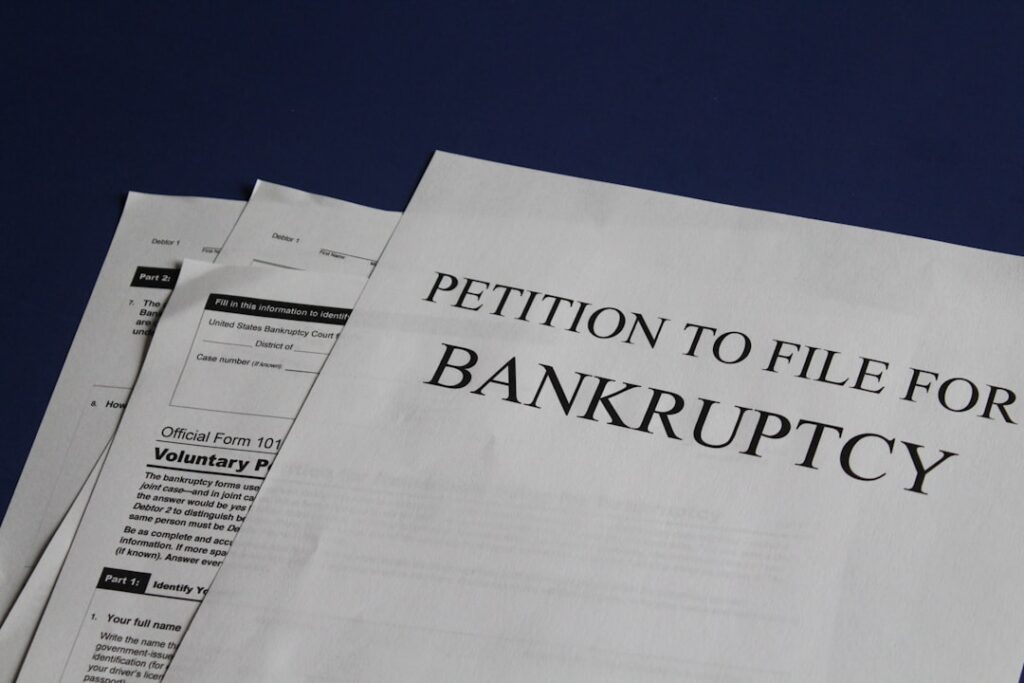
If you have paid a title lender more in fees than you originally borrowed and still owe the full balance, you are not alone, and you are not failing at budgeting. Single-payment title loans are built in a way that makes them hard to escape. Thinking clearly about a title loan and when to seek bankruptcy means looking honestly at the numbers and comparing the cost of filing against the cost of staying put. In this guide from Auto Cash Title Loans, we cover the warning signs, the math, how Chapter 7 and Chapter 13 treat title loans, and what filing actually costs.
Part of our Borrower Rights guide →
Why bankruptcy deserves a fair look
Bankruptcy carries stigma, but it is a legal process created for situations where debts cannot realistically be repaid. For a title loan borrower, it can stop a repossession through the automatic stay, end your personal liability for the debt, or restructure it at a much lower interest rate. It also has real costs, including years on your credit report. The goal is to compare those costs fairly, not to treat bankruptcy as either a disaster or an easy fix.
Bankruptcy is also not the only exit. Refinancing with a credit union, negotiating a payoff, or switching to an installment plan can work if your problem is limited to one loan.
The renewal math
CFPB research on single-payment title loans found that most loans are renewed rather than repaid, and about one in five loan sequences ends with the vehicle repossessed. Here is why renewals hurt so much.
Take a $3,000 title loan with a 25% monthly fee, a common structure that works out to roughly 300% APR. Each month you owe $750 just to renew. After six renewals, you have paid $4,500 in fees and still owe the $3,000. Another year at that pace would cost $9,000 more. Our guide to the title loan rollover trap walks through how this builds.
Warning signs it may be time to talk to an attorney
None of these is a legal test. They are practical signals that your situation may need more than a payment plan. Consider a consultation if several apply:
- You have renewed the loan several times and the principal has not gone down.
- The fees you have paid already exceed what you borrowed.
- You are using one high-cost loan to pay another.
- Your combined debt payments take a large share of your take-home pay, leaving you short on rent or food.
- Repossession is imminent, and losing the car would cost you your job.
- You have other debts, such as medical bills or credit cards, that are also behind.
- You cannot see a realistic way to pay off the principal within the next year.
Chapter 7 vs. Chapter 13 for title loans
Chapter 7 discharges your personal liability for most debts, usually in a few months. The title lender’s lien on the car survives, so to keep the car you would need to redeem it by paying its current value in a lump sum, or reaffirm the loan. If you surrender the car, the remaining balance is discharged. You must qualify under the means test if your income is above your state’s median. See our full guide to title loans and Chapter 7.
Chapter 13 sets up a three-to-five-year repayment plan. You can usually keep the car, and the plan may reduce the secured balance to the car’s value and replace the contract rate with a court-approved interest rate that is far lower. It suits people with steady income who need the vehicle for work. Read more about title loans and Chapter 13.
The automatic stay: immediate breathing room
When you file, an automatic stay takes effect. It generally stops repossession, collection calls, lawsuits, and wage garnishment. If a tow is scheduled tomorrow, filing today can stop it, although the lender can later ask the court for permission to proceed. If the car has already been taken, act quickly, since some states treat ownership as transferring to a title pawn lender after a redemption period ends.
What filing actually costs
- Court filing fee: $338 for Chapter 7 and $313 for Chapter 13 under current federal fees. The Chapter 7 fee can be waived for low-income filers, and fees can be paid in installments.
- Credit counseling and debtor education: two required courses from approved providers, usually modestly priced, with fee waivers available based on income.
- Attorney fees: these vary by region and case complexity. Chapter 13 fees are typically higher but can often be paid partly through the plan. Legal aid offices may help qualifying low-income filers for free.
Compare the total against what you would pay in renewals over the next year. In many title loan situations, a year of fees is larger than the cost of filing. That comparison is not the only factor, but it is a useful starting point.
The credit impact in perspective
Chapter 7 can stay on your credit reports for up to 10 years and Chapter 13 for up to seven. That matters. But if you are already behind on several debts, your credit is likely already damaged by late payments and collections. Ending unmanageable debt can make it easier to start rebuilding with on-time payments and a secured credit card. Our article on title loans after bankruptcy explains why taking a new title loan soon after filing is risky.
Next steps
- Gather your title loan contract, payment history, and a payoff statement.
- List every debt and your monthly income and expenses.
- Look up your car’s current value.
- Book a consultation with a bankruptcy attorney or legal aid office. Many attorneys offer a free first meeting.
- Keep the car insured and avoid new borrowing while you decide.
For more on your protections, visit the borrower rights hub.
Frequently asked questions
Can bankruptcy stop a title loan repossession?
Filing triggers an automatic stay that generally halts repossession immediately. The lender can ask the court to lift it, and if the car is already gone, your options depend on timing and state law.
Is it better to file Chapter 7 or Chapter 13 for a title loan?
Chapter 7 is faster and suits people willing to surrender the car or able to redeem it. Chapter 13 usually lets you keep the car through a plan. An attorney can compare both for your situation.
How much does it cost to file bankruptcy?
Federal filing fees are $338 for Chapter 7 and $313 for Chapter 13, plus two required courses and attorney fees, which vary. Fee waivers and installment payments are available in some cases.
Will I lose my car if I file?
Not necessarily. Chapter 13 often lets you keep it, and Chapter 7 offers redemption or reaffirmation. Surrendering it is also an option if the car is not worth what you owe.
Disclaimer: Auto Cash Title Loans is an informational website and is not a lender. We do not make loans, credit decisions, or broker loans. Information provided is for general educational purposes only and should not be considered financial advice. Title loan terms, rates, and availability vary by state and lender. Always review your state’s regulations and consult with a licensed financial professional before making borrowing decisions. APR for title loans typically ranges from 100% to 300% or higher.
Important Disclosure
Auto Cash Title Loans is not a lender, does not broker loans, and does not make loan or credit decisions. This website does not constitute an offer or solicitation to lend. We may receive compensation from affiliate partners for referrals.
APR rates vary by state and lender. Typical APR for title loans ranges from 25% to 300%. Please review your loan terms carefully before accepting any offer.

Related Articles

LoanMax Login: Account Access, Payments and Payoff Guide
Where the official LoanMax login and payment page is, how LoanMax says you can pay, how to pay off early…

LoanMart Login: Customer Portal, Payments and Payoff Letter Guide
How to reach the official LoanMart customer login, the ways LoanMart says you can pay, how to get a 10-day…

TitleMax Locations: How to Find a Store and What to Check Before You Go
TitleMax locations: how to use the official store locator, which states it lists, what to bring, and how to check…